
When you buy through links on our articles, Future and its syndication partners may earn a commission.

SpaceX will launch an advanced ocean-mapping satellite from California early Monday morning (Nov. 17), and you can watch the action live.
The Sentinel-6B spacecraft is scheduled to lift off atop a Falcon 9 rocket from Vandenberg Space Force Base on Monday at 12:21 a.m. EDT (0521 GMT; 9:21 p.m. on Nov. 16 local California time).
You can watch the launch live here at Space.com courtesy of NASA, or directly via the space agency. Coverage will begin at 11:30 p.m. EDT on Sunday (Nov. 16; 0430 GMT on Nov. 17).

Sentinel-6B is part of the European Union's Copernicus Earth-observing program. The new satellite will measure sea surface heights around the globe with great accuracy, continuing the work of its predecessor, Sentinel 6 Michael Frelich, which launched atop a Falcon 9 in November 2020.
"Monitoring sea-level rise is high on the global agenda," European Space Agency (ESA) officials wrote in a Sentinel-6B mission description.
"In the past 25 years, the average height of the world's oceans has risen by almost 10 cm [4 inches], according to data from Copernicus," they added. "The Copernicus Sentinel-6 mission has become the gold standard reference mission to monitor and record this key consequence of climate change."
Sentinel-6B will do this work using a radar altimeter instrument developed by ESA. The satellite also carries a NASA-provided microwave radiometer, which will determine atmospheric water content, allowing for more accurate interpretation of the altimeter's results.
During its first year of observations, Sentinel-6B will work with Sentinel 6 Michael Frelich, "enabling greater accuracy with precise cross-calibration between the two instruments," ESA officials wrote about the mission, which is a collaboration among the European Commission, ESA, NASA, Eumetsat, and the U.S. National Oceanic and Atmospheric Administration, with support from the French space agency CNES.
If all goes according to plan on Monday morning, the Falcon 9's upper stage will deploy Sentinel-6B about 57 minutes after liftoff. The 3,175-pound (1,440 kilograms) satellite will then make its way to its science orbit, which lies 830 miles (1,336 kilometers) above Earth.
The Falcon 9's first stage, meanwhile, will come back to Vandenberg for a landing about nine minutes after liftoff. It will be the third flight for this particular booster; its previous two missions lofted batches of SpaceX's Starlink broadband satellites, according to the company.
最近の投稿
- 1
 'Sex and the City' star Kim Cattrall marries longtime partner Russell Thomas in intimate London wedding
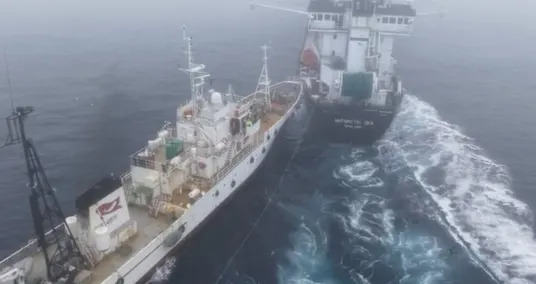
 - 2Activist vessel collides with krill trawler in Antarctic confrontation
- 3Famous Places to get-away for Americans
- 4Europe pledges over €15bn for clean energy for Africa
- 5Israel's haredi draft crisis: Court ruling and political stalemate reach breaking point



- Which Startup's Innovation Could Reform Medical care?
- Watch live as near-Earth asteroid Eros buzzes the Andromeda Galaxy on Nov. 30 (video)
- Scientists find twisting magnetic waves on the sun. Could this help solve a huge solar mystery?
- How to avoid or deal with an outrageous medical bill
- France honors the victims of the Paris attacks' night of terror 10 years on
- Geminid meteor shower, one of the year's most reliable, peaks this weekend
- The last penny was pressed by the U.S. Mint in Philadelphia today. Could the nickel and dime be next?
- Here's how 'Bridgerton' fans can watch the first episode of Season 4 before its Netflix release later this month
- Novartis eyes more bolt-on acquisitions, CEO says


