-
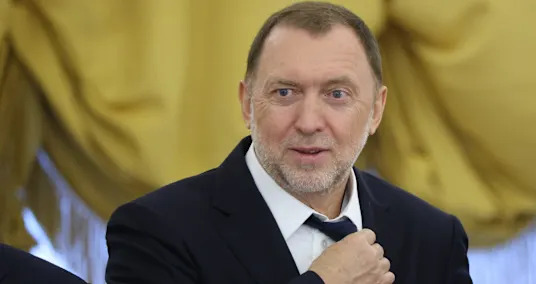
Russian tycoon Oleg Deripaska is calling for 12-hour, six-day workweeks.
-
The aluminum billionaire says longer work could help Russia speed through economic upheaval.
-
He says Russia's edge is its ability to rally and work harder in a crisis.
Russians should consider working 12-hour days, six days a week, as the country grapples with a deeper economic shift, Russian billionaire Oleg Deripaska said on Monday.
Referring to what he described as a changed global reality, Deripaska framed the country's slowing economy as more than a typical downturn driven by interest rates or monetary policy.
"This crisis is deeper. It is caused by a difficult transformation: from the global opportunities we once had to regional ones, with all sorts of restrictions," Deripaska wrote in a Telegram post.
He argued that Russia should tap into what he described as its only real resource — a "national characteristic."
"In difficult moments, we know how to pull ourselves together and work more," wrote Deripaska, the founder of Rusal, a major aluminum producer.
Longer working hours, he suggested, could help the economy adjust more quickly to changing global conditions.
"The sooner we switch to this new schedule — from 8 a.m. to 8 p.m., including Saturdays — the faster we will complete this transformation," the industrial magnate wrote.
His comments come as Russia's economy navigates a shifting landscape shaped by geopolitical tensions and changing trade flows.
Russia, a major energy exporter, has been benefiting from a surge in prices, with crude markets jolted by escalating tensions in the Middle East and disruptions to key supply routes.
Oil and gas revenues have historically accounted for more than a third of Russia's federal budget, which has been under pressure from sweeping sanctions in recent years. Official estimates showed Russia's economy grew 1% in 2025 — down sharply from 4.3% growth in 2024.
Disruptions to tanker traffic through the Strait of Hormuz — a critical global oil chokepoint — alongside a limited US sanctions waiver on some Russian shipments, have reshaped trade flows as countries scramble for supplies.
However, Deripaska had warned earlier this month that the conflict in the Middle East could weigh on global — and Russian — growth despite higher oil prices.
Benchmark crude oil futures are over 70% higher this year and trading above $100 per barrel.
Read the original article on Business Insider
最近の投稿
- 1
 10 Energizing Vocations in the Innovation Business
 - 2Artemis 2 astronauts are now headed to the moon. Why has it taken humanity so long to go back?
- 3How to watch 'Tell Me Lies' Season 3: Episode release times, streaming info and more
- 4Divorce filings, feuds and legal trouble: The 'Mormon Wives' drama keeps piling up
- 54 African Vacationer Locations




- German state railway loss widens, passengers warned of trouble ahead
- IDF kills senior PIJ Gaza City Brigade cmdr. who infiltrated Kibbutz Nahal Oz on Oct. 7
- The most effective method to Begin Your Excursion in Gold Venture
- BioMarin to acquire Amicus Therapeutics for $4.8 billion in rare disease bet
- Iran war pushes Germany's deficit to 4.2% as growth outlook is cut by 50%
- Space Condos to Lift Your Metropolitan Living
- Nick Reiner's defense attorney asks to be replaced, again delaying arraignment in connection with the stabbing deaths of his parents, Rob Reiner and Michele Singer Reiner
- Minneapolis ICE shooting: Woman dies after federal agent opens fire on her vehicle amid immigration crackdown
- Independence from the rat race for Recent college grads: Systems and Tips